© 2026 Ubuntu Basketball. All rights reserved.
Oct 25, 2025 11:13:54 AM
Cold Is Not a Rehab Plan, Why Some Injuries Need Warmth, Load, and Smart Movement
Walk into any gym and you will see the same reflex. Ankle tweak, ice. Tight calf, ice. Sore knee, ice. It feels responsible. It also misses the main job of recovery.
Pain relief matters. Swelling control matters. Healing and return to play depend far more on what you do after the first minutes, and how you reintroduce movement and load.
What the science says now
The old ICE and RICE approach focused on calming symptoms. Newer guidance puts the full rehab timeline front and center. A well-known example is PEACE and LOVE, which encourages protection and compression early, then progressive loading, movement, and exercise, while warning against relying on anti-inflammatory approaches as the main strategy.
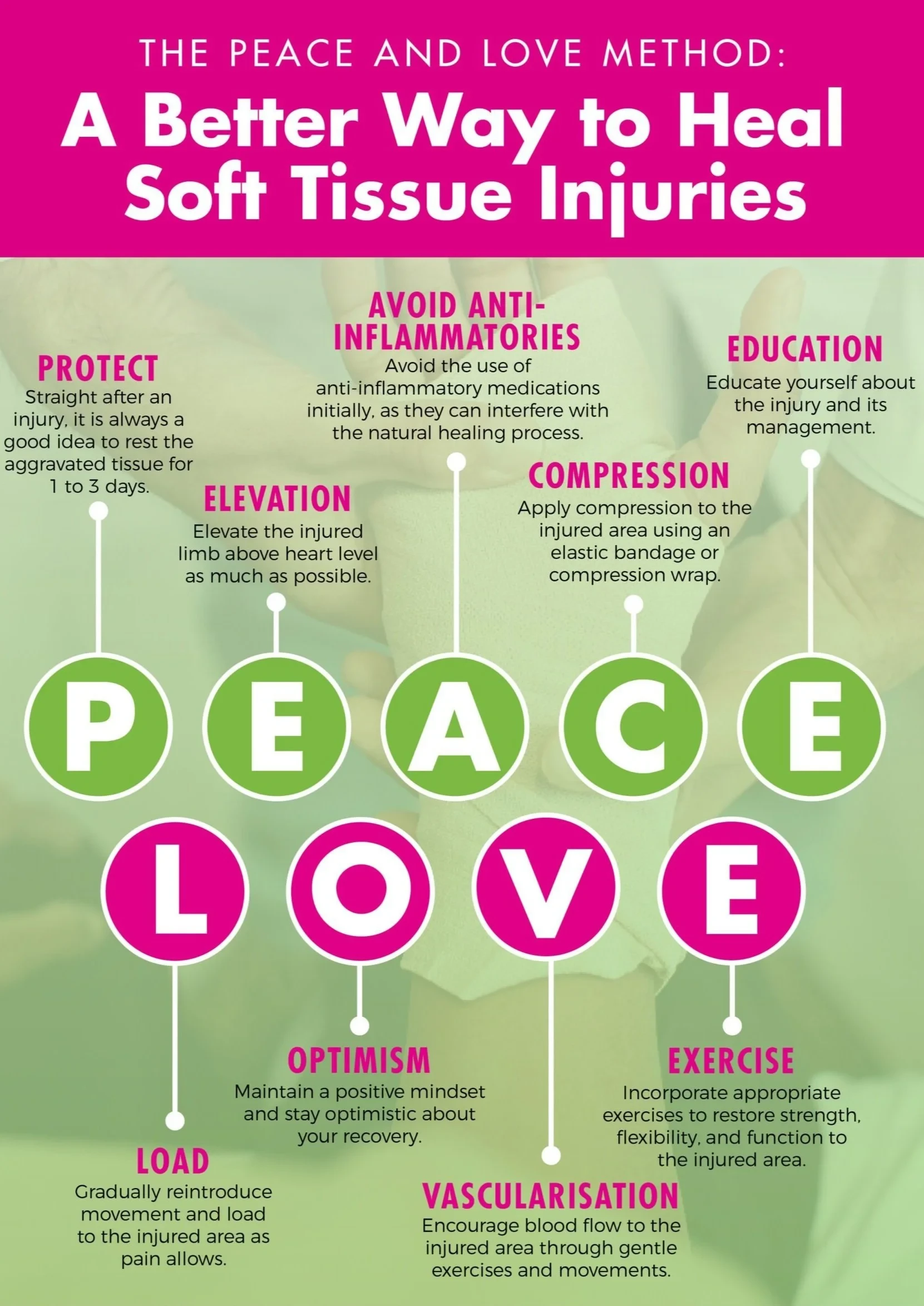
The key idea. Inflammation is not the enemy. It is part of tissue repair. The goal is to manage pain and swelling without shutting down the process that rebuilds capacity.
What ice can do, and what it cannot do
Ice can reduce pain. In a randomized trial on acute ankle sprains, intermittent icing reduced pain during activity after one week, but it did not show clear advantages for swelling or function compared with a more standard approach.
Reviews and guidelines tend to land in the same place. Cryotherapy may help symptoms in the short term, but it is not a stand-alone solution for faster return to sport. The bigger lever is early, guided activity and exercise.
So the question is not “ice or no ice.” The better question is “what problem am I solving right now?”
Ankle sprain, what to do instead of living on the ice pack
For most mild to moderate lateral ankle sprains, strong guidance supports early, supported weight bearing, manual therapy when needed, and progressive exercise for range of motion, strength, and balance. This approach also reduces recurrence risk.
A simple field-ready sequence
Phase 1, first 24 to 72 hours
- Protect. Use a brace or tape if needed. Avoid the positions that spike pain.
- Elevate and compress. This often beats lying still and hoping swelling disappears.
- Move early, within pain limits. Small ankle circles, ankle pumps, toe raises, gentle walking as tolerated.
- Use ice only as pain medicine. 10 to 15 minutes, then done. Do not chase numbness all day.
Phase 2, days 3 to 10
- Restore range. Knee-to-wall ankle rocks, controlled eccentrics, calf raises.
- Rebuild stability. Single leg balance, then balance with head turns, then balance while catching a ball.
- Add low-level elastic work. Line hops, small pogo jumps, short decel steps.
Phase 3, return to play
- Progress to game speeds. Cuts, stops, landings, reactive steps.
- Add uncertainty. Partner cue, visual call, decision tasks.
- Test. Can you hop pain free, change direction confidently, and tolerate next-day load?
Calf strains and muscle issues, why warmth and movement often win
A calf strain is a capacity problem, not a “freeze it until it disappears” problem. Early on, you still manage pain and protect the tissue. But muscle recovery depends on progressive loading and circulation.
Recent human research continues to question whether cryotherapy helps muscle regeneration, while heat-based approaches show promise for supporting recovery and regeneration after muscle injury models.
Practical sequence for a calf strain
Phase 1, first 48 hours
- Protect and compress. Limit long strides and fast stretch positions.
- Keep movement frequent and easy. Short walks, gentle ankle pumps, pain-free range.
- Avoid aggressive stretching early. Do not pull on healing tissue.
Phase 2, day 3 onward
- Add heat before movement if stiffness dominates. Think warm shower, warm wrap, then move.
- Start isometrics. Mid-range calf holds, 5 x 30 to 45 seconds.
- Build strength. Bent-knee and straight-knee calf raises, slow lowering, then faster reps.
- Add running exposure in steps. Walk jog, then short accelerations, then full-speed changes.
A simple decision rule for cold vs heat
Use cold when the main problem is sharp pain and throbbing, especially right after an acute sprain or impact. Use it briefly for comfort.
Use warmth and movement when the main problem is stiffness, protective tightness, or you are past the first couple of days and need to restore function. That is common with calf issues and many “tendon-like” complaints.
Ubuntu Basketball twist, rehab as skill learning, not passive treatment
At Ubuntu Basketball, CLA and Differential Learning are not just for shooting. They shape how we think about return to play.
- Treat rehab like skill acquisition. Your ankle and calf need to relearn timing, force, and coordination under real constraints.
- Use constraints, not long speeches. Change the task so the body finds solutions.
- Use external cues. Simple targets guide attention better than body-part instructions. This is consistent with coaching communication research on attention and cueing.
- winkelmannickpbcoachinglanguage…
- Add variability on purpose. Different surfaces, angles, speeds, and decision triggers, as soon as the tissue can handle it.
- Measure transfer. Not how it feels in a clinic. How it holds up the next day, and in basketball actions.
Example constraint progressions
Ankle
- Balance while catching, then balance while reacting to a partner’s point, then closeout steps into a stop.
- Cue: “Push the floor away and stick the landing.”
Calf
- Calf raises with different knee angles, then low pogo contacts, then short accelerations from multiple start positions.
- Cue: “Snap off the ground, quiet feet.”
Red flags, do not play hero
Seek medical help if you cannot bear weight, you hear a pop with immediate loss of function, you have visible deformity, severe swelling, numbness, or symptoms that worsen over 48 hours.
References
Dubois B, Esculier JF. Soft-tissue injuries simply need PEACE and LOVE. British Journal of Sports Medicine.
Martin RL, et al. Ankle Stability and Movement Coordination Impairments, Lateral Ankle Ligament Sprains, Clinical Practice Guideline Revision. Journal of Orthopaedic and Sports Physical Therapy, 2021.
Bleakley CM, et al. Cryotherapy for acute ankle sprains, randomized controlled study.
Bleakley CM, et al. Effect of accelerated rehabilitation on function after ankle sprain. BMJ, 2010.
Dablainville V, et al. Muscle regeneration is improved by hot water immersion but not by cryotherapy, human muscle injury model.
If you want, I can turn this into a shorter version for Instagram, and a longer version with a simple ankle and calf “day-by-day” checklist for players and parents.